Keeping on top of cleaning, laundry, and cooking can be a real challenge when a disability makes everyday movement, energy, or planning difficult. The good news is that the NDIS recognises this, and funds support for many of these tasks through what’s known as household task assistance. But the rules around what’s covered, and what isn’t, trip up a lot of participants and families.
This guide breaks down exactly what NDIS household tasks support includes, how it’s funded, and how to arrange it if you’re in Brisbane or the surrounding region.
What Is NDIS Household Task Assistance?
NDIS household task assistance is support delivered by a worker who helps you complete the chores you’d struggle to do safely or independently because of your disability. It’s not a cleaning service in the traditional sense. It’s built around your specific goals and needs, and it’s designed to help you stay safe and independent in your own home, not to replace the general housework that any household would need done.
This support sits under the Assistance with Daily Life budget, within your Core Supports funding. Core Supports is the most flexible part of an NDIS plan, which means, in most cases, you can use the funding across different daily living supports as your needs change.
What Household Tasks Does the NDIS Cover?
Coverage varies from plan to plan depending on what’s written into your goals, but the following are commonly funded:
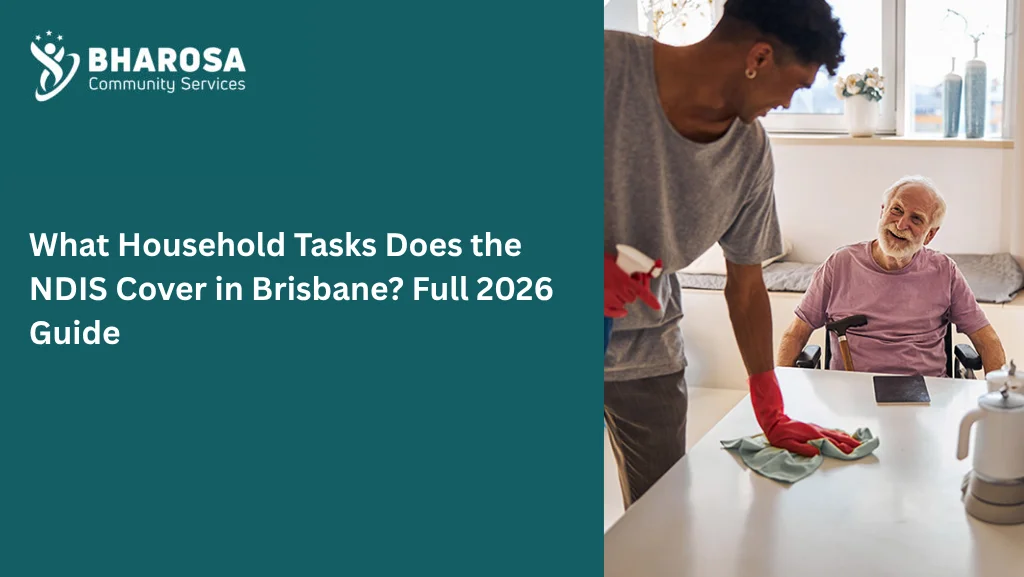
Cleaning. Support with vacuuming, mopping, dusting, and cleaning bathrooms and kitchens, focused on the areas of your home you use.
Laundry. Help with washing, drying, folding, and putting away clothes and linen.
Meal preparation. Assistance with meal planning, grocery shopping, and cooking, particularly where a disability makes standing, lifting, or fine motor tasks difficult.
Bed making and changing linen. Especially relevant for participants with mobility or fatigue-related conditions.
Basic home organisation. Help keeping living spaces safe and accessible, such as clearing walkways or organising frequently used items within reach.
Minor home safety tasks. Support with tasks like changing a lightbulb or a smoke alarm battery, where the task itself is a safety or access issue related to your disability.
If a task supports your ability to live independently and connects clearly to your disability-related needs, there’s a reasonable chance it can be funded. If you’re unsure whether something qualifies, it’s worth raising it directly with your support coordinator or plan manager before assuming it’s covered.
What the NDIS Doesn’t Cover
This is where a lot of participants get caught out, so it’s worth being upfront about it.
The NDIS generally won’t fund tasks that any household would need done regardless of disability, such as routine cleaning for other household members, general pest control, or appliance repairs. It also won’t cover large-scale gardening or landscaping work like new garden beds, retaining walls, or tree removal, since these are considered improvements rather than necessary, disability-related maintenance. Materials such as cleaning products, mulch, soil, or plants aren’t included either. The test the NDIS applies is whether the support is “reasonable and necessary” for your disability, not simply convenient.
If a task falls into a grey area, your support coordinator can help you word your plan review or goals so it’s clear how the task relates to your disability and your independence.
How to Get Household Tasks Added to Your NDIS Plan
If your current plan doesn’t include household task support, or you feel the current allocation isn’t enough, there are a few ways to approach it:
- Raise it at your next plan review. Come prepared with specific examples of tasks you’re struggling with and how they affect your daily life, health, or safety.
- Talk to your support coordinator. They can help translate everyday struggles (“I can’t safely stand long enough to cook dinner”) into the language the NDIS uses when assessing reasonable and necessary supports.
- Get supporting evidence if needed. For more significant requests, a letter from an occupational therapist, GP, or allied health professional explaining how the task relates to your disability can strengthen your case.
- Start with your provider. A good local provider will help you understand what’s realistic to request and can support you through the plan review conversation.
Why Choose a Brisbane-Based Provider for Household Tasks
Household task support works best when it’s consistent and delivered by someone who understands your home, your routine, and your local area. Bharosa Community Services supports NDIS participants with household tasks across Brisbane and the surrounding region, including Logan, Moreton Bay, Ipswich, and Caboolture.
Because household tasks assistance is often needed regularly, having a provider close by who can offer consistent workers, flexible scheduling, and someone who’s easy to reach when plans change makes a real difference day to day.
Is household cleaning covered by the NDIS?
Yes, but only cleaning that relates to your own disability-related needs and living spaces. General household cleaning for the whole family isn’t included.
Can I use NDIS funding for a cleaner I already use?
Only if that person is engaged through a registered or NDIS-compliant support arrangement and the tasks meet the “reasonable and necessary” test. It’s worth checking with your plan manager before assuming an existing arrangement can simply be funded.
How many hours of household task support can I get?
There’s no fixed number. It depends on your individual plan, your goals, and your assessed needs. This is decided during planning and plan reviews, not set by a standard NDIS rule.
Does the NDIS cover gardening?
Only basic, disability-related maintenance in some cases, not general gardening, landscaping, or materials. Large gardening jobs are typically considered the participant’s own responsibility, the same as for any other household.
What’s the difference between household tasks and domestic assistance?
They’re generally used interchangeably. Both refer to support with day-to-day tasks like cleaning, laundry, and meal preparation, funded under Assistance with Daily Life in your Core Supports budget.
Get Household Task Support in Brisbane
If you’re not sure whether your current plan covers enough household task support, or you’re setting up a new plan and want guidance on what to ask for, Bharosa Community Services can help. We work with NDIS participants across Brisbane, Logan, Moreton Bay, and Ipswich to arrange reliable, consistent household task assistance built around your goals.
Contact Bharosa Community Services to talk through your options.