Maintaining a clean, safe, and organized home is essential for your physical health and mental well-being. However, for many NDIS participants living with physical, cognitive, or psychosocial disabilities, keeping up with daily chores can be exhausting or practically impossible.
That is where the NDIS Assistance with Household Tasks funding comes into play. Despite being one of the most commonly requested supports, it is also one of the most misunderstood. One of the most frequent questions participants and their families ask is: What is my support worker actually allowed to do in my home?
If you are confused about what the NDIS covers when it comes to cleaning, cooking, and home maintenance, here is a complete, detailed guide to understanding your Core Supports.
1. Understanding Your Funding: Where Does It Sit?
Assistance with Household Tasks falls under your Core Supports budget, specifically within Support Category 01: Assistance with Daily Life.
This budget is highly flexible. It is designed to help you maintain your home environment when your disability prevents you from performing these tasks yourself.
The Golden Rule of Household Funding:
It is important to remember that the NDIS funds the support worker’s time to help you, or to do the tasks for you. The NDIS does not pay for the actual cleaning supplies, your groceries, your rent, or your electricity bills. These are considered everyday living expenses that all Australians pay, regardless of disability.
2. What Can a Support Worker Do?
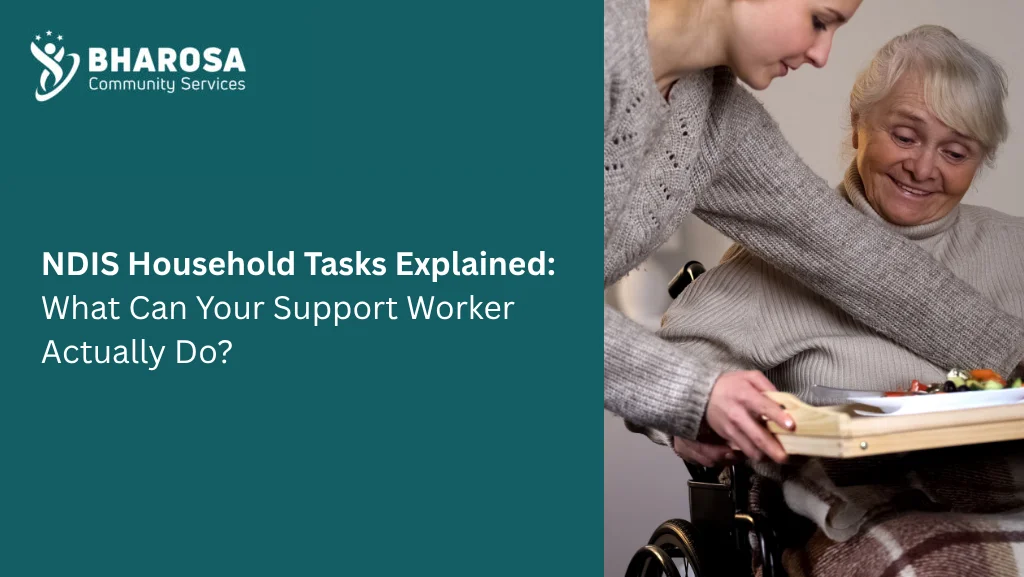
A qualified disability support worker can assist with standard, day-to-day household chores. The goal is to keep your living environment safe, hygienic, and comfortable. Tasks typically include:
- Cleaning and Hygiene: Vacuuming, mopping floors, dusting, taking out the rubbish, and wiping down kitchen and bathroom surfaces.
- Kitchen Duties & Meal Prep: Washing dishes, safely storing food, planning weekly menus, and cooking meals. If you have specific dietary requirements (such as thickened fluids for dysphagia), trained workers can ensure your meals are prepared safely.
- Laundry: Washing, drying, folding, putting away clothes, and changing bed linen.
- Basic Yard Maintenance: Light gardening, such as watering plants, sweeping pathways, or basic lawn mowing to ensure your home is physically accessible and free of trip hazards.
3. The Fine Print: What is NOT Covered?
To avoid confusion and frustration, it is helpful to know the boundaries of this funding. Support workers are exactly that—support workers. They are not professional tradespeople or specialized industrial cleaners.
The NDIS will generally not fund:
- Professional Deep Cleaning: Unless specifically approved in your plan with a specialized line item (such as an annual spring clean or end-of-lease cleaning for extreme circumstances).
- Major Landscaping: Removing large trees, building retaining walls, or extensive garden makeovers.
- Home Repairs: Plumbing, electrical work, or fixing broken appliances.
- Cleaning for Other Housemates: Your NDIS funding covers cleaning related to your use of the home. It cannot be used to clean up after roommates or family members who do not have a disability.
4. Building Your Independence (Capacity Building)
At Bharosa Community Services, we believe a great support worker doesn’t just do the chores for you; whenever possible, they do them with you.
Whether we are supporting a participant in Logan Village, Caboolture, or Hobart, our goal is capacity building. For example, instead of just cooking a meal and leaving it in the fridge, your support worker can help you write a shopping list, accompany you to the local supermarket, and cook the meal alongside you. We work with you to help you develop daily living skills, so you can gradually take on more household tasks independently and safely.
Frequently Asked Questions
Can I use my funding to hire a professional cleaning company?
Yes, if you are Self-Managed or Plan-Managed, you can use your Core Supports budget to hire a professional cleaning service, provided their rates align with the NDIS price limits and the service relates directly to your disability needs.
Do I need an OT assessment to get household tasks funded?
If you are requesting basic domestic assistance (like a few hours a week of cleaning), you may not need a full Occupational Therapy assessment. However, if you require extensive daily support, an OT report detailing your physical or cognitive limitations will greatly help your case during a plan review.
Need a hand around the house?
If household chores are becoming overwhelming or unsafe, you do not have to struggle alone. The right Assistance in Household Tasks can completely transform your daily routine, giving you a safe, comfortable home and more time to focus on your personal goals.
If you are looking for a highly trusted, registered NDIS provider in Brisbane and Tasmania, the experienced team at Bharosa Community Services is here to help. Contact us today to discuss your in-home support needs.